From Bitcoin to Blockchain Ecosystems
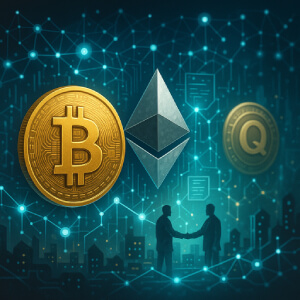
The story of cryptocurrency began in 2009 when Bitcoin gave birth to the concept of decentralized currency, money functioning without banks or governments. It worked transparently, irrevocably, and globally through the medium of blockchain technology. For the very first time, it allowed people to transact payments directly from one to another, the transaction being verified by a community-or-network of user-participants rather than a central authority.
Having proven that Bitcoin could secure value in a decentralized network, other ventures came along and experimented with ways to tap more into the promise of blockchains. Platforms like Ethereum came in with smart contracts, programmable contracts that are self-executing when certain criteria are fulfilled. As such, it opened further realms for application past payments, including lending, supply chains, tracking, and decentralized governance.
These developments diversified the digital economy over time. Thereby, the cryptocurrencies did not maintain their solitary stand of coins, but instead, they evolved into multi-utility ecosystems wherein tokens perform given tasks to power decentralized apps. The users are rewarded or given access to digital services. The next generation sees QUINCOIN (QIN) combining the utility of the blockchain with real sector-based value.
The Shift Toward Real-World Integration
Cryptocurrencies once existed mainly within the financial and tech communities, but their influence has now spread into everyday industries, from logistics to healthcare. The goal is no longer just to store or transfer value, but to create functional ecosystems that connect digital assets to real-world outcomes.
Practical Applications of Blockchain
Blockchain’s transparency, traceability, and built-in security make it an ideal foundation for industries that depend on trust and verification. In healthcare, blockchain helps ensure that medical records remain secure, tamper-proof, and easily shareable among authorized providers. In finance, it enables instant, low-cost cross-border transactions without relying on intermediaries. In digital commerce, blockchain supports verifiable ownership of assets, data, and intellectual property, reducing fraud and disputes. By creating a shared, decentralized system of record-keeping, blockchain strengthens accountability across sectors and builds confidence among users, institutions, and businesses operating in increasingly digital environments.
The Role of Utility Tokens
Utility tokens serve as functional access keys within decentralized ecosystems, allowing users to interact with platforms, pay for digital services, and receive rewards for participation. Their value comes not from speculation but from the real utility they provide within their networks. The more active and integrated the ecosystem becomes, the stronger the token’s role and sustainability. This is where QUINCOIN (QIN) defines its purpose, a digital asset designed not only for trading but for active use across healthcare and cryptocurrency platforms, linking financial participation with meaningful, real-world applications in a secure, blockchain-powered environment.
Introducing QUINCOIN (QIN)
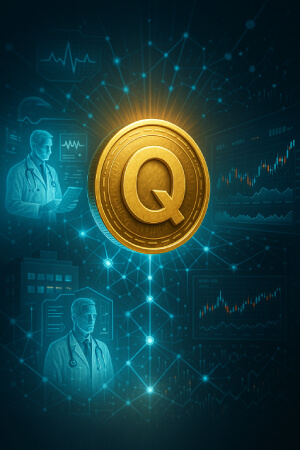
The aim of creating a new utility token on the lines of the next generation QINCOIN (QIN) is to have it operate across a unified network of digital and real-world platforms. Backing it is a continuously growing health care ecosystem on one side, and a digital trading exchange on the other, bitqin.io. This kind of dual foundation gives QIN a double benefit: utilitarian and financial-Neatly paralleling the efficiency of blockchain with the guarantee of innovation in healthcare.
QIN, at its core, allows users to conduct transactions, earn, and work across partner platforms such as Quincare, which uses blockchain technology to make the healthcare service landscape much more transparent and accessible in terms of data integrity. On the trading side of the equation, bitqin.io offers a safe environment where users are free to trade, supporting the ecosystem's liquidity and value circulation.
The Three Core Functions of QUINCOIN
The QUINCOIN token serves three primary roles:
- Transaction Medium: QIN can be used for payments, access fees, and service exchanges within the Quincare and bitqin.io ecosystems.
- Reward and Incentive Tool: Users who contribute to the ecosystem, through engagement, data sharing, or participation can earn QIN as rewards.
- Governance and Utility Function: In the future, QIN holders may have voting rights or access to exclusive features, reinforcing community-driven growth.
This multi-purpose structure ensures that QIN isn’t just a tradable asset but a functional component that adds value to user interactions.
Building Trust Through Blockchain Transparency
In digital finance and healthcare alike, trust is critical. Blockchain technology provides the foundation for that trust by ensuring every transaction and record is verifiable, time-stamped, and tamper-resistant. For QUINCOIN, this transparency underpins both the financial and operational sides of the ecosystem.
Within the Quincare network, blockchain can record patient data, consent records, and service usage in ways that preserve privacy while ensuring integrity. Users retain control over their information, and authorized access can be granted securely. Meanwhile, on bitqin.io, blockchain technology guarantees transparent trading operations, auditable smart contracts, and accountable token management.
Together, these layers form a digital environment where users can confidently interact whether they are managing their health data, investing in tokens, or using QIN for daily transactions.
Decentralization and the Future of Access
Decentralization is at the heart of cryptocurrency’s promise. It reduces reliance on intermediaries, enhances resilience, and empowers individuals to control their assets. QUINCOIN embraces this principle by creating an open framework that connects users, healthcare providers, and digital traders without unnecessary central barriers.
Democratizing Financial Participation
Through platforms like bitqin.io, individuals can trade, store, and transfer digital assets across borders with far fewer restrictions than those imposed by traditional financial systems. This level of accessibility opens global markets to users regardless of their location or banking status. People in regions with limited financial infrastructure can participate in cryptocurrency transactions securely and efficiently. By reducing intermediaries and transaction costs, platforms such as bitqin.io make digital finance more inclusive, giving individuals greater control over their assets and the freedom to manage their financial activities in a transparent, borderless environment.
Empowering Users in Healthcare
Similarly, Quincare showcases how blockchain technology can restore ownership and control of personal health data to individuals. Patients can securely store their medical records, grant access to doctors or healthcare institutions when needed, and monitor every interaction in real time. This system not only enhances transparency but also improves communication and coordination among healthcare providers. In both healthcare and finance, QUINCOIN serves as the connecting force linking personal empowerment, secure data management, and digital transactions under one decentralized model that prioritizes user rights, data integrity, and trust across all interactions.
Smart Contracts and Automation
Another key innovation driving QUINCOIN’s ecosystem is the use of smart contracts. These self-executing programs run directly on the blockchain, eliminating the need for intermediaries in transactions and agreements.
Smart contracts can automate processes such as subscription payments, reward distribution, or identity verification within Quincare. For example, when a user completes a health program or shares verified wellness data, a smart contract can instantly release QIN tokens as rewards. This automation reduces administrative overhead and ensures fairness and speed in every interaction.
In the trading environment, smart contracts on bitqin.io help secure token swaps, staking mechanisms, and liquidity pools, reducing the risk of fraud and ensuring transparent execution. Over time, this will enable the ecosystem to expand into new financial and service models all powered by trustless automation.
Bridging Finance and Healthcare Through Technology
While many cryptocurrencies focus purely on financial speculation, QUINCOIN takes a broader approach. By integrating blockchain with healthcare, it addresses one of the most sensitive and vital sectors of modern life.
Data Integrity and Security
Health information is among the most valuable and sensitive data people own. Protecting it from misuse or alteration is essential for maintaining privacy and trust. Blockchain technology provides a secure and tamper-resistant solution by recording each transaction or update in a distributed ledger shared across multiple nodes. This decentralized structure makes it extremely difficult for unauthorized users to alter or delete information. As a result, patients and healthcare providers can exchange data with greater confidence, knowing that records remain accurate, transparent, and protected from potential breaches or manipulation.
Incentivized Wellness Ecosystem
Users can also gain from health-related incentives that encourage proactive well-being. Through Quincare, individuals may earn QIN tokens by joining wellness programs, completing preventive checkups, or securely sharing anonymized health data for research. These tokens can later be used to access healthcare services, exchanged for other assets, or traded within the ecosystem, creating a continuous cycle of participation and reward. By connecting financial innovation with healthcare access, QUINCOIN demonstrates how blockchain technology can promote personal empowerment while supporting broader social benefits, turning everyday health actions into meaningful contributions to both individual and community well-being.
The Broader Context of Digital Assets
Multi-utility tokens like QUINCOIN testify to a much larger digital shift occurring across various crypto landscapes. Digital assets are no longer solely speculative instruments; they are clustered into core online economies. The blockchain is reinventing how value is created, stored, and shared from DeFi platforms to tokenized real-world assets.
Being given legitimacy by clarity in regulations, infrastructure improvements, and institutional interest, digital assets will, in turn, push for the mainstream adoption of projects with very real utility and applications in areas such as healthcare and data management.
QUINCOIN's model fits well into this vision since it acts as an intermediary for novice users and contains the existing base as an operational framework for crypto and health tech actors.
Challenges and the Path Forward
Emerging technologies such as blockchain and digital assets have their share of troubles, ranging from regulatory uncertainty to lack of proper user education. The volatility of crypto-market poses problems for a new entrant while technical complexities are barriers in understanding. Yet if a certain initiative follows usability, security, and transparency concepts, all these barriers could cease-to-exist for that initiative.
Building Sustainable Adoption
Instead of displacing existing industries, QUINCOIN aims for their direct integration. By partnering with healthcare entities or technology companies and agencies of digital trading platforms, it tries to show utility aside from pure speculation.
Regulatory Alignment
Compliance is the second relevant consideration. When using tokens, it should observe appropriate data protection, financial, or healthcare regulations so as to garner user and institutional trust. The more transparent itself in governance and operation, the more trust it generates, and this gives it a foundation for long-term sustainability.
With the passing of time in the ecosystem, QUINCOIN's success depends on maintaining this equilibrium of innovation versus accountability in advancing blockchain utility while safeguarding user interests.
The Future of QUINCOIN
The next phase in the product development process of QUINCOIN will involve building partnerships, user adoption, and integration onto the platform. As Quincare and bitqin.io mature, QIN will emerge as the element that binds payments, rewards, and governance into one interoperable ecosystem.
Later versions will have cross-platform staking, decentralized insurance schemes, and improved data marketplaces where users themselves can sell and control their data. QUINCOIN will aspire to set an example in utilizing digital token applications for tangible benefits in both the virtual and real worlds by staying in tune with technological advancements and regulatory-oriented principles.
Why This Is Just the Beginning for Digital Assets
From Bitcoin into multi-utility ecosystems, the evolution of cryptocurrency represents a landmark event situation in the history of digital finance. In a nutshell, the blockchain is capable of changing not only how money moves but also how industries work.
QUINCOIN (QIN) embodies this evolution as a utility token in the spirit of blockchain transparency geared toward integrating health care, digital trading, and empowerment. The application of digital assets in conjunction with platforms such as Quincare and bitqin.io illustrates the bridging of digital assets from technology to daily life with participation, security, and innovation.
Explore
I know most persons still find it difficult to understand the concept of Web 3.0
— Viktor (@Viktor_Krypt) November 11, 2025
Let's break it down to the best minimum
Web 3.0 is a concept for a new decentralized internet built on blockchain technology; this gives users greater control of their data's, identity and assets… pic.twitter.com/wNnAoqZAvF
Blockchain hinges on five principles:
— IoT Channel 66 (@66Iot) November 9, 2025
- Cryptography for data security
- Distribution across computers to prevent tampering
- Decentralization for power distribution
- Immutability ensuring permanent records
- Tokenization for easy asset transfer.
RT @antgrasso pic.twitter.com/hqIgL7u3N4